
Why Healthcare Storage Systems Are Essential to Modern Healthcare Operations
- Danielle Burton

- Feb 3
- 7 min read
Updated: Feb 4
Modern healthcare facilities rely on more than clinical expertise to operate effectively. Behind every patient interaction is a complex system of inventory management, hospital logistics, and storage needs that must function with precision. From operating rooms and storage rooms to medical carts and transport carts, healthcare storage systems support safe access to medical supplies, surgical instruments, and medical equipment. As space limits and rules change, storage systems must be more planned. They must fit clinical workflows better to support efficient daily work.

Healthcare storage systems, also referred to as medical storage systems or healthcare storage solutions, are designed to organize, secure, and manage medical supplies across both clinical and non-clinical medical settings. In hospitals, clinics, long-term care environments, and laboratory spaces, these systems support consistent inventory management, controlled access, and efficient workflows. By structuring storage around daily operations and regulatory requirements, healthcare facilities can improve organization, reduce complexity, and ensure supplies are accessible where and when they are needed.
In healthcare facilities, these systems typically include:
Healthcare shelving solutions, including stainless steel shelves and medical wire shelving designed for durability, cleanliness, and efficient organization
Medical storage cabinets, such as surgical storage cabinets and secure cabinetry for supplies and instruments
Medical carts and transport carts, supporting point-of-use access and efficient movement of supplies
High-density and modular storage systems, designed to maximize storage capacity while adapting to different spaces and workflows
Integrated safety and security features, including lockable doors, sloping tops, and stainless steel bodies that support controlled access and hygiene
This article explores how healthcare storage solutions support modern hospital storage systems, where they create the greatest operational impact, and the challenges facilities face when storage is poorly planned. It examines how high-density storage systems, custom cabinetry, and modular shelving contribute to more organized, secure, and adaptable care environments. Effective storage planning also plays a key role in surgical instrument storage, supply chain optimization, and long-term facility growth, helping organizations maximize space while supporting safe, efficient care delivery.
Table of Contents:
What are Healthcare Storage Systems
Healthcare storage systems are built to organize, secure, and manage medical supplies, equipment, and surgical instruments. These systems work in both clinical and non-clinical areas. Hospitals, operating rooms, clinics, labs, and other medical facilities use these systems.
They support inventory management, infection control, and hospital logistics. Solutions like medical wire shelving, stainless steel shelves, medical storage bins, surgical storage cabinets, and custom cabinetry meet diverse storage needs. They keep supplies accessible, protected, and compliant at the point of care.
Key product advantages of healthcare storage systems include:
Increased efficiency, through shelving solutions, medical carts, and transport carts that help streamline access to supplies and reduce unnecessary movement within clinical environments.
Improved health and safety, through organized storage rooms, sterilization trays, and durable materials such as stainless steel that support clean, well-managed care environments.
Enhanced security, using lockable doors, security solutions, and controlled storage for medical supplies and equipment
These advantages help healthcare facilities move from disorganized storage to intentional, modular storage solutions. They also use high-density storage systems and maximize storage layouts. By considering shelf dimensions, multiple sizes, sloping tops, and specialized instrument tables, organizations can better align storage with clinical workflows and space constraints. This approach supports safer, more controlled medical settings while improving organization across departments. Thoughtful storage planning helps streamline supply chain operations over time. It reduces operational complexity and supports consistent, long-term care in healthcare settings.
Why Healthcare Storage Systems Matter More Than Ever

Healthcare facilities face growing demands to deliver high-quality care. They must manage limited space, complex supply chain operations, and evolving compliance requirements. As patient volumes increase, storage needs expand across operating rooms, storage rooms, and clinical areas, often revealing gaps in hospital storage systems. Disorganized storage systems can slow workflows, affect inventory management, and increase operational risk. Well-planned healthcare storage systems help medical facilities create more organized and predictable work areas. These environments support staff workflows and safer daily operations.
When healthcare storage solutions are designed around clinical workflows, they help streamline how supplies are organized and accessed within care environments. Modular storage solutions, high-density storage systems, and mobile medical carts offer flexibility. They help as operational needs change. Healthcare organizations can create more consistent processes by aligning shelving solutions, medical storage bins, and secure storage with daily workflows. This supports clinical teams and reduces operational disruptions.
Key Areas Where Healthcare Storage Systems Have the Biggest Impact
Healthcare storage systems influence multiple aspects of daily operations across a wide range of healthcare environments. When people design storage carefully and include it fully in care settings, it supports steady processes. It improves organization and helps reduce problems between departments. The greatest impact is seen in areas where access, layout, and storage practices directly shape how clinical and support teams work each day. By improving how facilities store and access supplies, equipment, and materials, they can create more predictable environments. These environments better support efficient workflows and daily care.
Key areas where healthcare storage systems have the greatest impact include:
Infection control, by supporting separation of clean and soiled items and consistent material handling practices
Staff workflows, through organized, point-of-use access that reduces unnecessary movement
Patient safety, by minimizing clutter and supporting clear, organized care environments
Regulatory compliance, by enabling standardized storage practices that support inspections and audits
Space utilization, particularly in high-density or aging facilities where storage efficiency is critical
When these areas are addressed together, healthcare storage systems move beyond basic functionality and become a strategic operational asset. Facilities that invest in well-planned storage are better positioned to maintain consistent standards, adapt to changing demands, and support clinical teams effectively. Aligning storage design with workflows and operational goals helps create safer, more efficient environments that support both patient care and long-term facility performance.
Common Storage Challenges in Healthcare Facilities
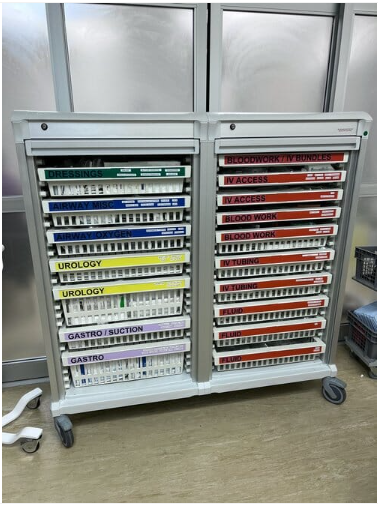
Many healthcare facilities operate with storage systems that were never designed to support today’s medical environments. Aging infrastructure, limited space, and changing regulations often lead to overcrowded storage rooms, inconsistent shelving solutions, and medical supplies stored far from the point of use. These conditions can make inventory oversight harder. They can add unnecessary movement to daily workflows. They also make it harder to keep storage practices consistent, especially in busy areas like operating rooms and shared clinical spaces.
Without a coordinated approach to healthcare storage solutions, facilities often use temporary fixes. These include mismatched medical carts, unsecured storage, or inefficient shelving. These short-term workarounds add complexity to daily operations, increase handling time, and make consistent processes harder to maintain. Poorly planned medical storage systems reduce flexibility over time. They slow workflows. They also limit a facility’s ability to maximize storage capacity across departments and care areas.
How Purpose-Built Healthcare Storage Systems Solve These Challenges
Purpose-built healthcare storage systems support the daily work of modern medical facilities. They do not make clinical teams change to fit generic storage solutions. Planners design these systems around clinical workflows, storage needs, and rules. This ensures medical supplies and equipment are stored safely and consistently. These solutions match storage design with how care is given. They help staff find important items faster in different care areas. This supports smoother workflows, better organization, and more reliable daily operations.
Purpose-built healthcare storage systems usually support operations by doing specific tasks.
Organizing inventory in operating rooms, storage rooms, and clinical areas
Supporting hospital logistics through clearer storage layouts and access points
Reducing unnecessary movement by positioning supplies closer to the point of use
Improving consistency across departments with standardized storage practices
Additional design features strengthen these benefits. Modular storage solutions, high-density storage systems, and custom cabinetry help facilities adapt to space constraints and evolving care models. Clear separation of clean and soiled items, secure storage with lockable doors, and durable materials such as stainless steel bodies support safety and long-term use. Aligning shelving solutions, medical carts, and surgical storage cabinets with daily workflows helps create more reliable, organized medical settings.

Planning Healthcare Storage Systems for Long-Term Use
Planning healthcare storage systems for long-term use requires a strategic approach that reflects how different healthcare environments operate and evolve over time. Storage needs differ in critical and acute care settings, long-term care homes, private clinics, and labs. These differences depend on patient numbers, equipment complexity, and workflow intensity. Healthcare storage solutions must support inventory management, hospital logistics, and medical supply storage. They must also be flexible. This helps them adapt to changing care models and regulatory requirements.
Modular storage solutions, high-density storage systems, and adaptable shelving help medical facilities grow. They do this without expensive redesigns. Features such as adjustable shelf dimensions, multiple sizes, custom cabinetry, and secure storage with lockable doors help facilities respond to growth and technology changes. Organizations can involve clinical, facilities, and operational teams early. This helps them implement healthcare storage systems that maximize storage capacity. These systems support safe medical settings. They also perform well over the long term.
Conclusion: Role of Healthcare Storage Systems in Medical Facilities

Healthcare storage systems play a critical role in how modern medical facilities operate, adapt, and deliver care across a wide range of healthcare settings. Well-designed healthcare storage solutions help with inventory management, infection control, and hospital logistics. They work in critical and acute care environments, long-term care homes, private clinics, and laboratories. Purpose-built medical storage systems organize medical supplies, equipment, and surgical instruments. They also support compliance and daily clinical workflows.
As healthcare environments become more complex, storage can no longer be treated as a secondary consideration. Facilities can use strategic planning with modular storage solutions, high-density storage systems, and secure shelving solutions. This helps them maximize storage capacity and improve efficiency. It also supports frontline teams. Organizations can invest in flexible, scalable healthcare storage systems. This protects their long-term investments. It also creates safer, more resilient medical settings. These settings support consistent, high-quality care delivery.
Frequently Asked Questions About Healthcare Storage Systems
What makes healthcare storage systems different from standard storage solutions?
Healthcare storage systems are designed specifically for clinical and regulated environments. Unlike standard storage, they support infection control, compliance requirements, and point-of-use workflows. These systems help organize supplies safely, separate clean and soiled items, and support efficient daily operations without creating workflow barriers.
How do healthcare storage systems support infection control and compliance?
Healthcare storage systems support infection control by organizing supplies in ways that reduce clutter and promote consistent handling practices. Features such as enclosed storage, separation of materials, and easy-to-clean surfaces help maintain clean care environments. From a compliance perspective, structured storage supports audits, inventory oversight, and standardized procedures, helping facilities maintain consistent practices across departments and care settings.
When should healthcare facilities review or update their storage systems?
Healthcare facilities should review storage systems when expanding services, renovating spaces, or experiencing workflow inefficiencies. Changes in patient volume, care delivery models, or regulatory requirements can also signal the need for updates. Regular evaluation helps ensure storage systems continue to support operational needs, staff workflows, and safe, efficient care delivery over time.

