
Digital Marketing for Small Business, What Actually Works in 2026
- Danielle Burton

- Jan 7
- 20 min read
Updated: Jan 20
Digital marketing continues to change quickly, and for small businesses it can feel difficult to know where to focus. New algorithms, shifting customer behavior, and constantly evolving social media platforms create a lot of noise. Many business owners are left wondering which efforts actually matter and which ones can be ignored. In 2026, success is not about keeping up with every trend, but about making smarter, more intentional choices.
What works best for small businesses in 2026 is a focused approach built around visibility, trust, and conversion rather than trying to do everything at once. Successful businesses prioritize digital marketing channels that align with how customers search, compare options, and make decisions online. Clear messaging, strong search presence, and consistent communication help build credibility. Data-informed insights support these efforts. They guide customer action and create lasting results even without large marketing budgets.
In this article, we break down the digital marketing channels that truly make a difference for small businesses in 2026. You will learn where to focus your time, how to adapt to AI driven search and changing customer expectations, and how to build strategies that lead to real growth. The sections below are designed to help you move forward with clarity, confidence, and practical direction you can apply right away.
Article Index:
What Digital Marketing Channels Actually Work Best for Small Businesses in 2026
How Can a Small Business Get Found Online Without a Large Marketing Budget?
What Should Small Businesses Focus on First, SEO, Social Media, or Paid Ads?
How Do Small Businesses Turn Website Visitors Into Real Customers?
How Can Small Businesses Measure Digital Marketing Success Without Complex Tools?
Frequently Asked Questions About Digital Marketing for Small Business
What Digital Marketing Channels Actually Work Best for Small Businesses in 2026
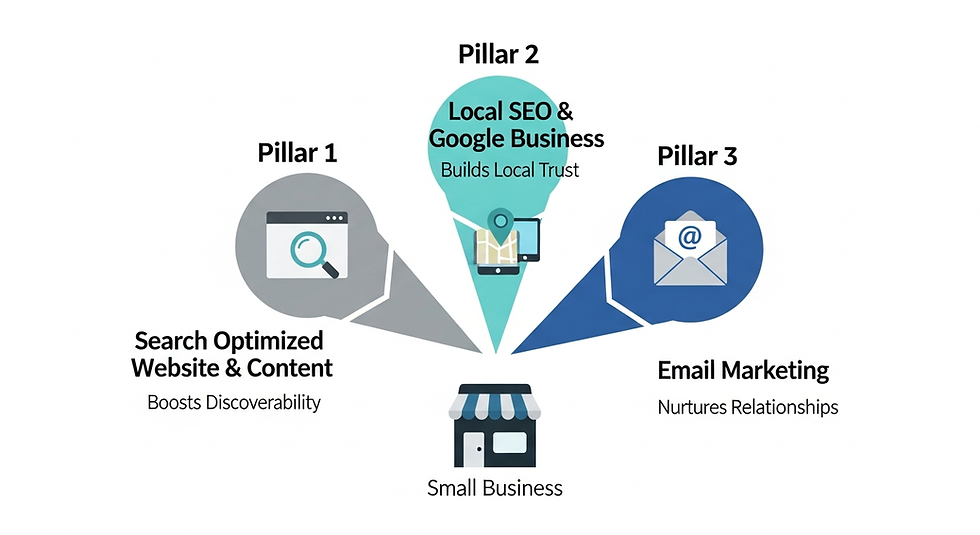
In 2026, the best digital marketing channels for small businesses focus on discoverability through SEO, local trust with Google Business Profile, and building relationships with Email Marketing.
In 2026, the digital marketing channels that prove most effective for small businesses are those that prioritize discoverability, build immediate trust, and simplify the customer's journey towards action. It’s less about broad strokes and more about precision, ensuring your message reaches the right audience at the right time. The goal is to be present where your potential customers are actively searching for solutions, to offer them clear value and reassurance, and to make it effortlessly simple for them to engage. This strategy makes sure every marketing effort helps important business goals. These goals include more brand awareness and more product sales.
Top performing channels include:
Search Optimized Website and Content: A website that clearly articulates your services, answers customer questions, and is optimized for search engines acts as your digital storefront and primary resource hub. This is crucial for both traditional search and increasingly, AI-driven search experiences.
Local SEO and Google Business Profiles: For businesses serving a specific geographic location, mastering local SEO and maintaining an up-to-date Google Business Profile (formerly Google My Business) is paramount. This drives high-intent customers who are actively seeking your products or services.
Email Marketing: Nurturing relationships with existing customers through targeted email campaigns remains a highly effective strategy for fostering loyalty, encouraging repeat business, and driving consistent revenue with a high ROI.
Social Media: Strategic use of social media platforms is essential for building visibility, establishing credibility, and fostering community. Focus on platforms that align with your audience and brand identity to cultivate genuine connections.
Paid Advertising: Used judiciously, pay-per-click ads and display ads can powerfully amplify proven organic strategies, support specific promotions, and accelerate growth when foundational elements are firmly in place.
Search Optimized Website and Content
Your website is the base of your online presence. In 2026, its success depends on strong SEO and content that truly helps your audience. An SEO-optimized site ranks higher in search results and fits AI-powered queries and personalized suggestions. This means structuring content to answer customer questions (Answer Engine Optimization or AEO) and making business info easy to find by AI and local search. For example, home service businesses can list common problems, prices, and timelines. Financial services can answer questions about loans and insurance. Health practitioners can explain treatments and care. Helpful content with a solid strategy supports long-term digital growth.
Local SEO and Google Business Profiles
For businesses serving a specific area, excelling in local SEO is essential. An optimized Google Business Profile (formerly Google My Business) helps capture customers searching nearby. When users look for "plumber near me" or "best coffee shop downtown," your accurate listing ensures you appear. Manage your NAP Consistency (Name, Address, Phone) across all directories, focusing on digital platforms. Showing service areas, photos, or specials boosts engagement. Clinics listing services and credentials build trust. Using customer reviews and active profile management attracts ready-to-book customers without constant paid ads, making it key to local marketing.
Effective Email Marketing Strategies for Customer Loyalty
Email Marketing remains a powerful, cost-effective channel for small businesses with high returns. In 2026, it builds deeper customer relationships and repeat business. Well-crafted emails keep your brand in customers' minds, share updates, offer promotions, and provide education. This direct contact reduces reliance on paid ads like Google Search Ads. Professional services can share tips and reminders; e-commerce can send product updates and reorder prompts; travel brands can share guides and offers. Consistent, valuable emails strengthen loyalty and support growth.
Targeted Social Media Marketing for Brand Engagement
Social Media Marketing is key to building brand awareness, credibility, and community. In 2026, focus on one or two platforms where your audience is most active, like Facebook or Instagram, to showcase your brand, share customer stories, and show expertise. Use tools like Meta's Business Suite to schedule content and track analytics. While direct sales may not be the main goal, consistent, authentic posts build trust. Working with micro influencers can expand reach effectively. Measuring engagement through social listening and sentiment analysis helps understand your audience and guide future campaigns.
Strategic Paid Advertising to Boost Conversions
While organic strategies build a strong and sustainable foundation, paid advertising offers a way to accelerate results when used thoughtfully. Pay per click ads such as Google Search Ads, along with Meta ads on platforms like Facebook and Instagram, can drive immediate and targeted traffic to specific offers, services, or promotions. Video based platforms such as YouTube, TikTok, and even advertising within online games provide additional opportunities to build awareness and reach audiences in more immersive environments.
Paid campaigns are most effective when layered on top of strong organic efforts. Running ads before website messaging is clear, user journeys are optimized, or local profiles like Google Business are well managed often leads to wasted spend. When businesses use paid advertising strategically, it directs users who want to buy to pages made for conversion. This lets businesses control costs and measure performance. It also helps support product sales, promotions, and marketing goals more precisely.
Bottom Line Takeaway
Ultimately, for small businesses in 2026, digital marketing success is about precision, consistency, and connection. The most effective approach prioritizes fewer, well-chosen Marketing Channels over a scattered, broad-stroke strategy. Clear, compelling messaging that resonates with customer needs, combined with consistent execution across SEO, content, social media, and email, builds both visibility and trust. The goal isn't to dominate every online space, but to be a clear, confident, and consistent presence where customers actively search, compare, and make decisions. This focused methodology not only reduces overwhelm for business owners but also drives more meaningful and sustainable growth.
How Can a Small Business Get Found Online Without a Large Marketing Budget?
You can get found online in 2026 without a big marketing budget. Focus on strategies that build visibility and trust naturally over time. Instead of perpetual paid exposure, successful small businesses invest in creating digital assets, like optimized website content and strong social media profiles, that continue to work for them long after their initial creation. The key lies in clarity and consistency, choosing channels that align with how customers naturally search for solutions and information. Businesses can grow their online presence steadily by focusing on building trust and showing value. This growth is sustainable, affordable, and effective. It makes their Digital Marketing efforts more impactful.
Build Momentum With Long Term Digital Strategies

Small businesses can grow steadily by using search-focused strategies that build over time. In 2026, SEO works with AI-driven methods like AEO (Answer Engine Optimization) and GEO (Generative Experience Optimization) to appear in search results, AI answers, and local recommendations. AEO structures content to answer customer questions, while GEO optimizes business info for AI and generative search. When content marketing and social media match how customers search and compare, businesses improve visibility and brand awareness without high costs. This long-term approach is vital for sustainable Digital Marketing.
Build a Strong Search Friendly Website First
A clear, search-optimized website is the foundational pillar for any small business aiming to be discovered online. Through thoughtful content creation and a robust content strategy, you empower search engines and AI platforms to understand precisely what your business offers. Web pages that are designed to answer common customer questions, clearly explain your services, and guide visitors toward desired actions significantly improve your engagement rate and Conversion Rate. Even a relatively small website can achieve high performance when core SEO techniques are applied consistently and the content provides genuine value. Investing in a well-structured, informative website helps your business get found. It also shows your business as a credible solution to customer needs. This website forms the base for all other Digital Marketing efforts.
Strengthen Local Search and Online Trust
For businesses serving a specific geographic area, focusing on local SEO is very important. It helps with consistent customer acquisition. An optimized Google My Business profile, coupled with accurate contact details and comprehensive service descriptions, is fundamental to improving your local search performance. Online reviews and customer feedback act like strong word-of-mouth advertising. They build trust and credibility with potential clients beyond just listings. These elements work synergistically to enhance your local marketing campaign, attracting high-intent customers who are ready to engage or make a purchase, often without the need for ongoing paid advertising. Keeping accurate NAP Consistency in all online business directories is very important. It shows search engines and customers that your business is real and local.
Use Content Marketing to Solve Real Problems
Content Marketing is one of the strongest and most affordable ways for small businesses to build authority and get organic traffic. Businesses can create valuable educational blog posts, detailed FAQ sections, and in-depth service pages. This shows their expertise and supports their long-term Search Engine Optimization (SEO) goals. When integrated into a realistic Content Calendar, consistent content creation becomes a manageable and highly rewarding endeavor. One well-made piece of content that solves a customer's problem or answers a question can do better than many short social media campaigns. It can keep visibility and lead generation steady over time. This approach shifts the focus from promotion to education, positioning your business as a helpful resource.
Be Intentional With Social Media Marketing
Social Media Marketing serves as a crucial channel for enhancing visibility, building familiarity, and reinforcing brand trust. In 2026, the effectiveness of social media platforms hinges on a deliberate and purpose-driven approach. Rather than attempting to maintain a presence everywhere, focus your efforts on the platforms where your target audience is most active and receptive. Sharing social media content that honestly shows your work, customer experiences, and behind-the-scenes views can build brand awareness. You do not need to post every day or use a lot of paid ads. Effective social media marketing prioritizes consistency and delivering genuine value. Strategic influencer marketing can extend your reach and impact. Collaborate with micro influencers for well-planned Influencer Campaigns. Make sure these campaigns match your authentic brand message. This approach drives meaningful engagement.
Use Email Marketing to Stay Connected
Email Marketing remains a key part of cost-effective Digital Marketing for small businesses. It offers great chances to build customer relationships and encourage repeat business. Simple, yet well-timed email campaigns are instrumental in keeping your brand top-of-mind, supporting excellent customer service, and reinforcing your value proposition. Communicating directly with your existing customers reduces your need for expensive paid channels like Google Search Ads and pay-per-click ads. It also builds stronger and more engaged customer loyalty. This direct channel allows for personalized communication that can promote new products, share important updates, or offer exclusive content, all contributing to sustained engagement and revenue.
Optimize and Measure What Already Exists
Budget-friendly growth in Digital Marketing often stems from optimizing existing efforts rather than solely focusing on constant new content creation. Regularly updating and improving existing web pages can improve performance. This can happen without extra costs. Enhancing headlines, fixing broken internal links, and adjusting your overarching content strategy can yield substantial benefits. Basic insights gleaned from tools like Google Analytics are invaluable for understanding what drives traffic, sparks customer inquiries, and ultimately leads to sales. By paying close attention to these signals, small businesses can make smarter, data-driven decisions, enhance their results, and achieve steady growth without the need for overly complex tools or advanced analytical expertise. This focus on continuous improvement is key to maximizing your Marketing Capabilities.
Build Visibility by Working Smarter, Not Louder
Achieving online visibility without a significant marketing budget in 2026 is best accomplished by working smarter, not louder. This involves a strategic focus on clarity in messaging, ensuring customers can quickly grasp the value your business offers. Consistency across your digital efforts builds a cohesive and trustworthy brand presence. This includes Search Engine Optimization, content marketing, social media marketing, and email marketing. Prioritizing the right channels and tactics, rather than trying to engage with every platform, ensures your resources are used effectively. Building a digital presence that strengthens over time, and creating trust and visibility without relying on high spending or purely short-term tactics, are the hallmarks of sustainable success. This deliberate approach ensures your Digital Marketing investments yield lasting results.
“Good marketing makes the company look smart. Great marketing makes the customer feel smart.” – Joe Chernov Salesforce
What Should Small Businesses Focus on First, SEO, Social Media, or Paid Ads?
For most small businesses in 2026, the most effective approach is not to choose exclusively between SEO, social media, or paid ads, but rather to understand how these vital Marketing Channels work together in a strategic sequence. Businesses that get good results start by building strong basics. They focus on clear messages and good search visibility. Once these foundational elements are in place, they layer in trust-building channels like content and social media, followed by paid strategies designed to accelerate growth. This phased approach ensures that resources are allocated efficiently and that each marketing activity builds upon the successes of the others.
Start with SEO and website fundamentals.
Search Engine Optimization (SEO) should always be the primary priority for any small business, as it forms the bedrock that supports all other digital marketing activities. A clear, well-organized website with service pages and good copy that answers customer questions is key for organic discoverability. SEO is not merely about keyword stuffing; it's about making your business easily understandable and accessible to search engines, AI platforms, and, most importantly, real people. Even basic optimization efforts can improve your long-term visibility. They can also reduce your need for paid traffic. This sets a strong foundation for all future Digital Marketing efforts.
Use social media to support trust and visibility.
Once your website effectively communicates what you do and who you help, social media emerges as a powerful tool for reinforcing credibility and expanding visibility. Social platforms function best as supporting channels where potential customers can witness your brand in action, gain insights into your company values, and confirm your ongoing activity and trustworthiness. For small businesses, focusing efforts on one or two key platforms where your target audience already spends their time is far more effective than attempting a presence on every available channel. This focused approach ensures that your social media marketing efforts are impactful and genuinely contribute to building relationships and trust.
Add paid ads only when the basics are in place.
Paid advertising is most potent when employed as an accelerator for proven strategies, rather than as a starting point for most small businesses. Launching ad campaigns before your website messaging is crystal clear, your user journeys are optimized, or your Google Business Profile is thoroughly managed can often result in wasted spend and subpar performance. When integrated strategically, pay-per-click ads, such as Google Search Ads, and display ads can effectively drive targeted traffic to specific offers, promotions, or high-converting pages. This focused approach helps small businesses control costs and improve campaign results. It also helps measure results better over time. This ensures marketing money is spent wisely.
Think in terms of sequencing, not competition.
The digital marketing landscape is best understood through the lens of sequencing, not competition between channels. SEO helps your business show up in search results when customers look for solutions. This helps people find your business for a long time. Social media then builds familiarity and trust by keeping your brand visible, relatable, and credible over an extended period. Finally, paid ads provide speed and scale, amplifying what is already performing well organically. When these channels are implemented in the right order, each one inherently strengthens the others. Strong foundational elements ensure that all traffic attracted has a clear, well-defined path towards engagement, confidence building, and ultimately, conversion.
Adjust based on business type and goals.
The ideal Digital Marketing focus for a small business can naturally vary depending on its specific type, urgency of customer needs, and how its audience behaves online. For instance, local service businesses often experience more rapid results from strong SEO and enhanced local search visibility. E-commerce brands, conversely, may find greater success by leveraging social media content to showcase products and build initial interest. Time-sensitive promotions or new product launches can significantly benefit from targeted, short-term paid campaigns. The overarching principle is to align each channel choice with customer intent, the timing of their purchase journey, and their readiness to take action.
In summary, small businesses should first prioritize SEO and clear website messaging to ensure they are easily discoverable and understood. Social media can then be strategically employed to build trust, credibility, and ongoing visibility. Paid ads are most effective when introduced later in the process, serving to amplify existing successes and accelerate growth. This step-by-step, integrated approach maximizes impact and minimizes wasted resources.
How Do Small Businesses Turn Website Visitors Into Real Customers?
Small businesses turn website visitors into paying customers by removing obstacles carefully. They build trust quickly. They guide people clearly toward the next step. In 2026, the art of conversion is less about aggressive sales tactics and more about delivering clarity, reassurance, and ease of action. When a website clearly communicates its value proposition and simplifies the process of engagement, visitors feel supported and are naturally inclined to take action. This user-centric approach ensures that the journey from visitor to customer is smooth, intuitive, and ultimately, successful.

Make the value clear immediately.
Upon landing on your website, visitors should grasp within the first few seconds precisely who you help, what you offer, and why it matters to them. Clear, concise headlines, brief explanatory text, and prominently displayed calls to action are crucial for guiding attention and minimizing confusion. When your core messaging is simple, focused, and easily digestible, visitors are more likely to remain engaged and explore further. Vague or overloaded content makes users lose interest and leave early. This causes missed chances for engagement and conversion.
Design simple and intentional user journeys.
Every page on your website should possess a distinct purpose that guides visitors progressively toward a specific, desired next step. Whether the ultimate goal is booking a consultation, requesting a quote, signing up for a newsletter, or making a purchase, visitors should never be left uncertain about what action to take. When web pages have too many confusing choices, unclear buttons, or extra steps, visitors take longer to decide. This lowers their confidence. This hesitation often translates directly into fewer conversions and missed revenue opportunities.
Build trust throughout the site.
Trust signals are fundamental to conversion, reassuring visitors that your business is legitimate, reliable, and capable of meeting their needs. Using testimonials, showing customer reviews, highlighting credentials, presenting case studies, and making contact information easy to find all help build confidence. Even subtle elements, such as consistently updated content and a cohesive brand identity across all pages, bolster credibility. These details collectively help visitors feel comfortable and secure enough to take the next decisive step in their engagement with your business.
Answer questions before they are asked.
Potential customers often arrive on your website with pre-existing questions or concerns regarding pricing, project timelines, expected outcomes, or suitability of your services. When your web pages proactively address these common inquiries, it significantly reduces uncertainty and elevates visitor confidence. Detailed FAQs, transparent service breakdowns, and clear explanations empower visitors to feel informed and supported in their decision-making process, rather than feeling pressured or rushed. This proactive communication is key to nurturing leads and facilitating conversions.
Optimize for mobile and speed.
A slow-loading or hard-to-use mobile experience can stop conversions before they start. This is especially true because more people browse on mobile devices. Websites that load quickly, display cleanly across all devices, and offer intuitive navigation create a smoother, more reliable, and ultimately more positive experience for visitors. When users can effortlessly find the information they need and move through your site without frustration, they are more likely to stay engaged, feel confident in your offerings, and ultimately take the desired action.
Use forms and contact options wisely.
Forms that are short and simple tend to perform significantly better than those that are long or overly complicated, as they reduce the perceived effort for visitors. Offering multiple avenues for contact—such as direct email, phone numbers, or easy-to-use booking tools—allows individuals to select the method that feels most comfortable and convenient for them. The overarching goal is to make the act of reaching out feel effortless and welcoming, rather than time-consuming or demanding, thereby lowering the barrier to initial contact.
Follow up and stay visible.
Not every website visitor will convert on their first visit, which is normal for most small businesses. Strategies like encouraging email sign-ups, sending helpful follow-ups, and gentle retargeting keep your business visible and in customers' minds. Consistent, supportive, and value-driven communication lets visitors consider options and build confidence, making them more likely to return ready to act. Turning visitors into customers means creating a smooth, supportive experience guiding them from their first click to their decision. Clear, easy-to-navigate websites built on trust help visitors feel confident. Good usability, transparent info, and thoughtful design reduce hesitation and help customers move forward.
How Can Small Businesses Measure Digital Marketing Success Without Complex Tools?
Small businesses can measure their Digital Marketing success without using complex tools. They should focus on results that show real business growth, not just vanity metrics. In 2026, success means understanding which actions lead to real customer engagement and business results. It is less about watching many dashboards or tracking too much data. Businesses should watch inquiries, conversations, and repeat interactions closely. These metrics provide a clear indication of what's working and enable the cultivation of stronger customer relationships, supporting steady and lasting revenue growth. Free tools or basic hosting reports can reveal important patterns and suggest ways to improve engagement and navigation. Furthermore, customer conversations are a robust and often underutilized method for small businesses to gauge success.
The key sign of successful Digital Marketing is whether your efforts generate real inquiries like calls, form submissions, emails, and appointments. These show potential customers find your business and take action. Even without advanced analytics, tracking these interactions gives a clear view of marketing effectiveness. For example, service businesses can ask new clients how they heard about them and log answers. E-commerce stores can track coupon codes linked to campaigns. Focus on metrics that impact your bottom line—leads, appointments, and sales—not just likes or shares. These insights help businesses refine messaging and focus on strategies that build strong relationships and growth.
Effective Digital Marketing Strategies for Small Businesses in 2026
Digital marketing for small businesses in 2026 is not about trying every new social media platform or chasing short lived trends. It is about using the right marketing methods with clear goals. Businesses that succeed focus on strong Search Engine Optimization and a clear content strategy. They build brand awareness by showing up consistently through social media, email marketing, and helpful content. When your website, Google My Business profile, online reviews, and customer feedback all work together, it becomes easier for people to find and trust your business.
These strategies are most effective because they build results over time. Creating useful content, following a realistic content calendar, and sharing consistent social media content help increase engagement and long term growth. Email campaigns, good customer service follow ups, and word of mouth referrals strengthen relationships and encourage repeat business. Local businesses often see faster results from SEO and local search, while e commerce brands may rely more on social content. The goal is a clear, connected digital presence that attracts, engages, and converts customers without overspending.
Conclusion: How Small Businesses Can Strategically Use Digital Marketing Channels in 2026
In 2026, the digital marketing landscape for small businesses is less about the sheer volume of activity and more about the strategic impact of focused efforts. The channels that truly deliver focus on discoverability through strong Search Engine Optimization and visible Google Business Profiles. They build trust with valuable Content Marketing and real Social Media Marketing. They also grow relationships using targeted Email Marketing. Understand the order of Marketing Channels. Start with SEO and a strong website. Build trust with content and social media. Then speed up results with paid ads. Small businesses can get great results without a huge budget.

The key takeaways for small business owners are clear: focus on fewer channels with greater depth, ensure your messaging is consistently clear and customer-centric, and execute with purpose. Building brand awareness and driving product sales is achieved by showing up confidently and consistently where your customers are actively searching and deciding. This combined approach uses tools like Google Analytics to measure results. It also requires understanding customer needs. This will help your business grow steadily and compete better in the changing digital world. Embracing a Digitalization Strategy that prioritizes these core elements will set your business up for success.
Key Takeaways for Small Businesses in 2026
Focus on fewer digital marketing channels and execute them well
Build visibility through SEO, local search, and helpful content before spending on ads
Use social media and email to build trust, familiarity, and long term relationships
Optimize what already exists before creating more content or campaigns
Treat paid advertising as an accelerator, not the foundation of your strategy
At its best, digital marketing does not feel forced or complicated, it feels natural, helpful, and built around the customer.
“The best marketing doesn’t feel like marketing.”~ Tom Fishburne
Frequently Asked Questions About Digital Marketing for Small Business
What is digital marketing for small business?
Digital marketing for small businesses uses online channels like websites, search engines, email, and social media platforms. These help customers find your business, learn about your products, build trust, and take action. It's a way to reduce reliance on traditional advertising by reaching potential customers where they are already spending their time online.
What digital marketing strategies work best for small businesses in 2026?
The most effective digital marketing strategies for small businesses in 2026 focus on strong search visibility through SEO and clear website messaging. They also build trust through online reviews and valuable content, leverage local SEO, and maintain consistent communication via Email Marketing. Paid ads are best used selectively after these strong foundational elements are in place.
Can a small business succeed with digital marketing on a limited budget?
Absolutely. Small businesses can achieve significant success with digital marketing even on a limited budget by prioritizing high-impact, cost-effective strategies. Focus on SEO, Content Marketing, and optimizing Google Business Profiles. Use strategic social media marketing and efficient Email Marketing. These methods can give excellent results without needing a large budget. The key is smart planning and consistent execution.
How important is social media for a small business?
Social media is crucial for building brand awareness, establishing credibility, and fostering community. It allows businesses to connect with their audience on a more personal level, share their values, and showcase their products or services. However, in 2026, effectiveness comes from strategic focus on relevant social media platforms rather than trying to be active everywhere.
What is the role of content marketing in 2026?
Content marketing remains vital in 2026 for demonstrating expertise, answering customer questions, and supporting SEO efforts. High-quality, valuable content attracts and engages potential customers, building trust and positioning your business as an authority. A well-defined content strategy and a consistent Content Calendar are key to successful content marketing.
How can a small business improve its local search ranking?
Small businesses should improve local search ranking by optimizing their Google Business Profile. They should keep accurate NAP Consistency across all online business directories. They need to ask for and respond to customer reviews. They should also create content specific to their location. Focusing on local SEO is paramount for attracting customers within your service area.
What is the benefit of email marketing for small businesses?
Email marketing offers a high return on investment by allowing businesses to communicate directly with an engaged audience. It's excellent for nurturing leads, promoting offers, sharing updates, and driving repeat business. Well-executed email campaigns help maintain customer relationships and reduce reliance on more expensive acquisition channels.
Should small businesses invest in paid advertising such as Google Ads, Meta Ads, or video platforms like YouTube and TikTok?
Yes, but strategically. Pay-per-click ads and display ads, can be very effective for accelerating growth, supporting specific campaigns, or reaching new audiences. However, they are most impactful when used to amplify existing organic successes and drive traffic to well-optimized landing pages, rather than as a standalone strategy. Once the money stops, so do the leads.
How can small businesses measure digital marketing success?
Success can be measured by tracking key performance indicators (KPIs) that reflect business goals, such as website traffic, conversion rates, lead generation, and sales revenue. Even without complex tools, simple tracking methods like asking customers how they found you, monitoring form submissions, and analyzing basic website analytics can provide valuable insights. Tools like Google Analytics offer accessible ways to monitor performance.
What is the difference between SEO and local SEO?
Search Engine Optimization (SEO) refers to optimizing your entire online presence to rank higher on search engines for a broad range of keywords. Local SEO focuses on improving your visibility for searches done in a specific geographic area. It often involves your Google Business Profile and local directories. This helps attract customers near your business.
About the Writer

I write SEO informed, intent driven content built to perform across traditional search and AI generated results, including AEO and GEO. After nearly 15 years working and traveling aboard cruise ships, I transitioned to land based work, balancing family leadership and the demands of a high performance sports household before moving fully into entrepreneurship and digital marketing.
I have built and optimized multiple websites and content programs, contributing to measurable domain growth and long term visibility. View my portfolio or contact me directly to explore opportunities where strategic writing and thoughtful optimization matter.


